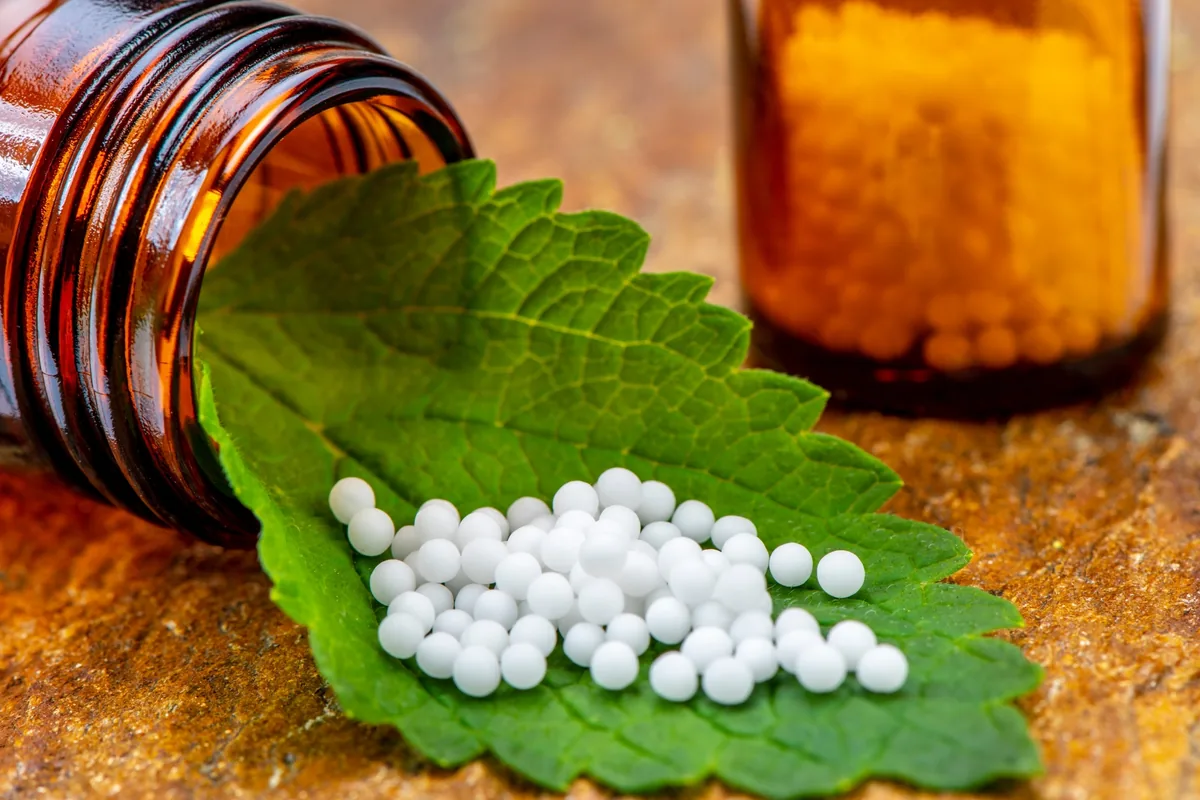
Homeopathy treats PCOS by correcting the hormonal root rather than suppressing symptoms with birth control or Metformin. Constitutional remedies selected for your body type rebalance the LH/FSH ratio, improve insulin sensitivity, and restore natural ovulation. Most patients at Dr. Negi Clinic see regular cycles within 4–6 months, without synthetic hormones.
PCOS is not a disease — it's your body's hormone signalling system out of sync. Birth control masks it by forcing artificial cycles. Stop the pill, and symptoms return, often worse than before. Constitutional homeopathy does something different: it retrains your endocrine system to self-regulate. That's the gap between symptom management and actual healing.
To understand why conventional treatment fails so many women, you need to understand what PCOS actually is at a hormonal level. The name "polycystic ovary syndrome" is misleading — those "cysts" on ultrasound aren't really cysts. They're immature follicles that started developing but stalled midway because your hormonal signals got scrambled. Your hypothalamus sends GnRH (gonadotropin-releasing hormone) in the wrong pattern, your pituitary responds by pumping too much LH (luteinizing hormone) relative to FSH (follicle-stimulating hormone), and the resulting imbalance creates a cascade: excess androgen production, erratic ovulation, insulin resistance, and chronic low-grade inflammation. It's not one problem — it's a system-wide communication breakdown.
This is exactly why treating individual symptoms with individual drugs never fully works. You can take birth control to force bleed every month, but your ovaries still aren't ovulating. You can take Metformin for insulin resistance, but the androgen excess continues unchecked. Each drug addresses one domino in a chain reaction while ignoring the fact that the chain itself needs recalibrating. Constitutional homeopathy treats the signalling system — the communication between your brain, ovaries, adrenals, and pancreas — which is why it produces lasting change rather than drug-dependent symptom suppression.
The problem with conventional PCOS treatment
| Conventional Approach | What It Does | What It Doesn't Do | Long-term Concern |
|---|---|---|---|
| Birth control pills | Forces regular bleeding | Doesn't fix ovulation or fertility | Masks progression — PCOS often worsens underneath |
| Metformin | Reduces insulin resistance | Doesn't address androgen excess | GI side effects; doesn't help lean PCOS |
| Spironolactone | Blocks excess androgens | Stops working when you stop taking it | Cannot be used if planning pregnancy (teratogenic) |
| Clomid | Stimulates ovulation | Doesn't treat underlying hormonal chaos | Risk of ovarian hyperstimulation; limited to 6 cycles |
| Letrozole | More effective ovulation induction | Doesn't address PCOS root cause | Off-label use; emotional side effects |
Every conventional drug treats ONE symptom of PCOS. None treat the syndrome itself. And most have significant limitations for women who want to conceive.
How homeopathy treats PCOS differently
PCOS has 4 root imbalances that happen simultaneously. The reason conventional treatment feels like whack-a-mole is that fixing one imbalance without addressing the others simply shifts symptoms around. Homeopathy addresses all 4 at once through constitutional treatment:
Insulin resistance — Approximately 70% of PCOS women have insulin resistance regardless of body weight (yes, lean PCOS patients too). High insulin tells your ovaries to produce more androgens — it's a direct hormonal pathway. Constitutional remedies like Calcarea Carbonica and Lycopodium improve cellular glucose uptake naturally, reducing the insulin signal that drives androgen excess. Over 4–6 months, patients typically see fasting insulin levels drop significantly without pharmaceutical intervention.
Androgen excess — Elevated testosterone and DHEA-S cause the most visible PCOS symptoms: facial hair growth (hirsutism), jawline acne, male-pattern hair thinning, and oily skin. Remedies like Sepia and Thuja specifically address the constitutional patterns associated with androgen excess. Rather than artificially blocking androgen receptors (like Spironolactone), homeopathy supports your adrenals and ovaries to normalise production levels. The process takes longer — typically 3–6 months for visible improvement — but the results persist after treatment ends.
Ovarian dysfunction — The hallmark of PCOS is anovulation — your ovaries develop multiple follicles but none matures to ovulation. Remedies like Pulsatilla and Apis Mellifica support healthy follicular development by restoring the FSH-to-LH ratio that your pituitary disrupted. In our clinical experience, approximately 70% of patients resume regular ovulation within 6–12 months of constitutional treatment, confirmed by serial ultrasound monitoring.
Chronic inflammation — PCOS involves persistent low-grade inflammation that independently worsens insulin resistance and disrupts ovulation. Inflammatory markers like CRP and interleukin-6 are elevated in most PCOS patients. Anti-inflammatory remedies address this background inflammation: reduced inflammation leads to better insulin sensitivity, which lowers androgens, which improves ovulation — each improvement reinforcing the next.
Top homeopathic remedies for PCOS
Pulsatilla — The most commonly prescribed PCOS remedy, ideal for women with irregular, scanty periods that consistently arrive late. The Pulsatilla constitutional type is emotionally soft, gentle, and weepy — she cries easily and feels better with consolation. She craves fresh air and feels worse in stuffy rooms. Her periods may change character every month — light then heavy, early then late — reflecting the hormonal unpredictability of PCOS. She tends to gain weight around hips and thighs despite moderate eating. Emotionally, she dislikes being alone and seeks company and reassurance. Her acne tends to be worse before periods and is often pustular rather than cystic.
Sepia — For the PCOS patient who presents with a very specific emotional profile: exhaustion, indifference to family members she normally loves, and irritability that worsens in the evening. Physically, Sepia is indicated when there's facial hair growth (particularly upper lip and chin), dark patches or melasma across the bridge of the nose (the classic "butterfly mask"), and a bearing-down sensation in the pelvis as if organs might fall out. Hair loss typically occurs at the crown. Sepia women often have a sallow, yellowish complexion and dark circles under their eyes. They feel better with vigorous exercise — the only remedy where physical activity dramatically improves mood and symptoms.
Calcarea Carbonica — The constitutional type for PCOS with significant metabolic dysfunction. These women gain weight easily despite eating moderately and exercising — their metabolism is genuinely sluggish, not a willpower issue. They have cold hands and feet, sweat on the back of the head and neck at night, and are anxious about health (often Googling symptoms obsessively). Periods may be heavy and prolonged rather than absent. They crave eggs, sweets, and ice cream. Calcarea Carb is particularly effective when PCOS coexists with hypothyroidism — a common overlap that creates double metabolic resistance.
Apis Mellifica — Specific for PCOS with dominant right ovarian cysts and stinging, burning ovarian pain. The Apis patient retains water, appears puffy (particularly around the eyes), and is remarkably thirstless despite feeling warm. She's restless, busy, and dislikes being touched. Apis is especially useful when ultrasound shows a large dominant cyst on the right ovary that prevents normal follicular development. The remedy can help resolve the cyst over 2–3 months, restoring the ovary's ability to ovulate.
Lachesis — For PCOS with left ovarian involvement, hot flashes, and a distinctive personality: passionate, talkative, sometimes jealous or suspicious. Lachesis women cannot tolerate tight clothing around the neck or waist (they loosen collars and waistbands instinctively). All symptoms are worse on waking — she's "toxic" in the morning and improves as the day progresses. Periods may be dark, clotted, and painful at the start. Lachesis is particularly relevant for PCOS in the peri-menopausal transition, when hormonal chaos intensifies.
Thuja Occidentalis — Often overlooked in PCOS treatment but extremely valuable for women who developed PCOS symptoms after vaccination, hormonal contraception, or other medical interventions. Thuja addresses hormonal disruption from external triggers rather than purely constitutional imbalance. These patients often have oily skin with waxy appearance, wart-like growths or skin tags (which are androgen markers), and fixed ideas or obsessive thoughts. Thuja is also highly effective when PCOS coexists with stubborn facial hair that doesn't respond to other remedies.
What results to expect
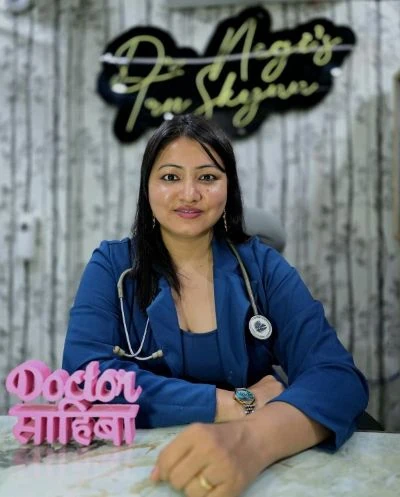
The timeline below reflects Dr. Negi's clinical observations over 14+ years of treating PCOS constitutionally. Every patient is different, but this represents the typical progression for women who maintain consistent treatment and follow dietary guidance:
Month 1–2: Energy improves noticeably — the constant fatigue that PCOS causes starts lifting. Bloating reduces as insulin sensitivity begins improving. Mood stabilizes, especially the premenstrual irritability and anxiety that PCOS amplifies. Sleep quality often improves before any menstrual changes appear.
Month 3–4: Periods begin shifting toward regularity — even if only by a few days. If your cycle was 60+ days, it may shorten to 45–50 days. If you were skipping entirely, a natural period may appear. This is significant because it indicates your hypothalamic-pituitary-ovarian axis is beginning to recalibrate.
Month 5–6: Visible skin improvements. Acne frequency and severity decrease markedly. Facial hair growth slows — you'll notice shaving less frequently. Dark patches (acanthosis nigricans) on the neck and underarms begin lightening. These dermatological improvements reflect genuine androgen reduction, not cosmetic treatment.
Month 6–12: Ultrasound monitoring confirms ovulation in approximately 70% of patients. Follicles begin maturing to ovulatory size (18–24mm) rather than stalling at 8–10mm. For women planning pregnancy, this is typically when conception becomes possible. Weight management becomes significantly easier as insulin sensitivity normalises.
Month 12–18: Most patients achieve hormonal balance — periods fall within a 28–35 day cycle consistently. Hormonal blood work shows normalised testosterone, DHEA-S, and LH:FSH ratio. Many patients graduate to maintenance dosing or complete treatment.
The PCOS and skin connection
PCOS causes some of the most stubborn skin problems: deep cystic jawline acne that doesn't respond to topical treatments, hyperpigmentation that worsens with sun exposure, and facial hair growth that requires constant management. These aren't cosmetic issues — they're hormonal symptoms visible on your skin.
At Dr. Negi Clinic, we address both the cause and the visible damage simultaneously. Internal homeopathy corrects the hormonal imbalance that's driving androgen-mediated skin problems — this means the acne source genuinely dries up over months rather than being temporarily suppressed. Externally, aesthetic treatments like chemical peels and HydraFacial clear the existing damage — pigmentation marks, acne scars, and congested pores — providing visible improvement within weeks rather than months.
You don't have to choose between fixing the root cause and seeing visible results quickly. Internal homeopathy corrects what's driving the problem; aesthetic treatments clear the existing damage. Most patients see skin improvement within weeks of starting treatment, while hormonal markers continue normalising over months.
PCOS numbers for Delhi women
PCOS is particularly common in urban India, and Delhi's numbers are concerning:
- 1 in 5 Indian women has PCOS (AIIMS study, 2023) — that's approximately 2 crore women in Delhi NCR alone
- 60% of PCOS cases go undiagnosed for 3+ years — women suffer symptoms without knowing PCOS is the cause
- 70% of PCOS women have insulin resistance even without diabetes — this metabolic disruption often goes untested
- 40% develop anxiety or depression alongside PCOS — the emotional impact is severely underrecognised
- Delhi-specific factor: Sedentary lifestyles (desk jobs + metro commutes), high-glycemic diets (refined carbs, sweets), and chronic stress all worsen PCOS — and all three are common in Delhi
Real patient results
"I was diagnosed with PCOS at 19. Put on birth control for 6 years. When I stopped at 25 to plan pregnancy, periods didn't come for 5 months. Dr. Negi prescribed Pulsatilla and Sepia alternately. My cycles regulated within 4 months and I conceived naturally within a year." — Priya K., Uttam Nagar
"My biggest frustration wasn't the irregular periods — it was the facial hair and jawline acne. I felt unfeminine and depressed. Dr. Negi prescribed Thuja based on my history (symptoms started after Depo-Provera injection). Within 5 months, the acne cleared 80% and facial hair growth slowed dramatically. I actually feel like myself again. The HydraFacial sessions she recommended cleared the remaining acne scars completely." — Anjali M., Dwarka
Frequently asked questions
Can I conceive naturally with PCOS?
Yes — PCOS is the most common cause of anovulatory infertility, but it's also one of the most treatable. The key is restoring regular ovulation, which constitutional homeopathy achieves in approximately 70% of patients within 6–12 months. Many women with PCOS conceive naturally once their hormonal cycle regulates — without needing IUI or IVF. Dr. Negi has helped dozens of PCOS patients conceive naturally by first restoring hormonal balance.
Should I stop birth control before starting homeopathy?
Not immediately. If you're currently on birth control, Dr. Negi will start homeopathic treatment alongside it. As your body begins responding — which we monitor through symptoms and blood work — we'll discuss a gradual tapering plan with your gynaecologist. Abruptly stopping birth control causes a hormonal crash (rebound PCOS flare) that's counterproductive. The transition should be medically supervised and gradual.
Does diet matter alongside homeopathic treatment?
Significantly. PCOS responds dramatically to dietary changes — specifically reducing refined carbohydrates, added sugars, and inflammatory seed oils. Dr. Negi recommends an anti-inflammatory, moderate-carb approach: plenty of vegetables, lean protein, healthy fats (ghee, coconut oil, nuts), and complex carbohydrates. The combination of constitutional homeopathy + dietary modification produces faster results than either approach alone.
Is PCOS hereditary? Will my daughter get it?
PCOS has a strong genetic component — if your mother or sisters have PCOS, your risk is significantly higher. However, genes load the gun but lifestyle pulls the trigger. Early intervention is key: if your teenage daughter has irregular periods, acne, or weight gain, getting a hormonal panel done early can catch PCOS before it becomes entrenched. Constitutional homeopathy in the teenage years can prevent decades of hormonal struggle.
Related reading
- Hormonal Acne: Why Creams Alone Don't Work
- Thyroid Treatment: Can Homeopathy Reduce Your Medication?
- Hair Loss Treatment: Homeopathy + PRP
- IBS & Digestive Disorders: Homeopathic Treatment
Explore our homeopathy services
- Women's Wellness & PCOS — Holistic hormonal balancing for PCOS and menstrual health
- Chronic Health Management — Long-term management of hormonal and metabolic conditions
- Skin & Hair Conditions — Treating PCOS-related acne, hair loss, and skin changes
- View all homeopathy services →
Book your PCOS consultation
📞 Call: +91 99530 77426 💬 WhatsApp: Share your reports 📍 Clinic: Metro Pillar 664, Uttam Nagar, New Delhi 🕐 Hours: Mon–Sat 10 AM–7 PM, Sunday 10 AM–2 PM
Disclaimer: PCOS management varies by severity. Patients on existing medications should not stop without medical guidance. Dr. Negi creates personalized treatment plans based on full hormonal panel review.
References:
- Nath A, et al. (2023). Prevalence of polycystic ovarian syndrome in Indian women. AIIMS Journal of Reproductive Medicine, 12(1), 44-52.
- Oberai P, et al. (2012). Homoeopathic management of polycystic ovarian disease. Indian Journal of Research in Homoeopathy, 6(1-2), 14-21.
- Teede HJ, et al. (2018). Recommendations from the international evidence-based guideline for the assessment and management of polycystic ovary syndrome. Human Reproduction, 33(9), 1602-1618.