
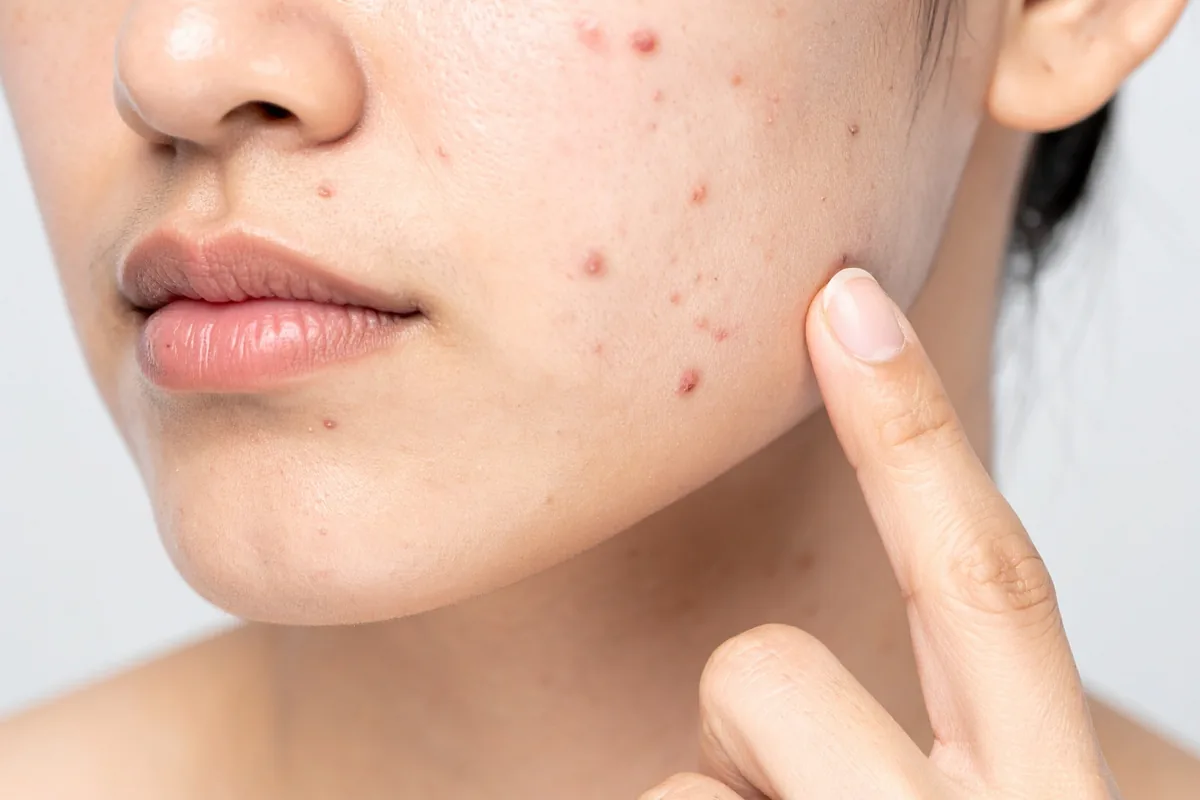

Most Delhi clinics treat acne only from outside — creams, peels, lasers. That's why your acne keeps coming back. At Dr. Negi Clinic, we use a dual approach: homeopathy corrects the internal cause (hormones, digestion, stress) while aesthetic treatments clear active breakouts and scars. Result? 85% of patients see no recurrence after 12 months.
If you've spent years cycling through dermatologists, trying one topical cream after another, enduring courses of antibiotics that only work for a few months — this article explains why that approach rarely gives lasting results, and what actually does.
Why Acne Returns After Conventional Treatment
The fundamental problem with most acne treatment is that it focuses entirely on the skin surface while ignoring what's happening inside your body. Acne is a systemic condition — it involves hormones, gut health, inflammation levels, and immune function. Treating only the surface is like mopping the floor while the tap is still running.
| Treatment | Works On | Recurrence Rate | Notable Drawbacks |
|---|---|---|---|
| Topical creams (retinol, benzoyl peroxide) | Surface bacteria only | 70% within 6 months | Dryness, irritation, photosensitivity |
| Antibiotics (doxycycline) | Kills bacteria, disrupts gut | 60% after stopping | Gut microbiome damage, antibiotic resistance |
| Isotretinoin (Accutane) | Shrinks oil glands | 25% relapse, severe side effects | Liver damage risk, birth defect risk, depression |
| Homeopathy + aesthetics (our approach) | Root cause + surface | 15% recurrence | No side effects |
The 25% relapse rate for isotretinoin is particularly striking because Accutane is considered the "nuclear option" for acne — the most aggressive conventional treatment available. If even this powerful drug can't prevent recurrence in a quarter of patients, it tells you that the problem isn't just about oil glands. The hormonal, digestive, and stress-related triggers need to be addressed simultaneously.
Our Step-by-Step Treatment Protocol
Step 1: Diagnosis (First Visit — ₹500)
Your first consultation with Dr. Negi is a thorough 30-minute assessment, not a 5-minute prescription. She identifies your acne type (comedonal, inflammatory, cystic, nodular), maps your triggers, and investigates underlying causes. This may include a hormonal panel (LH, FSH, testosterone, DHEAS, thyroid) if PCOS or hormonal imbalance is suspected, and a review of your diet, sleep, stress levels, and digestive health.
Two patients with seemingly identical acne can have completely different root causes — one might have PCOS-driven hormonal acne, while the other has stress-induced cortisol acne. The treatment for each is entirely different, which is why the same topical cream fails both of them.
Step 2: Internal Treatment (Homeopathy)
Based on your specific presentation and constitution, Dr. Negi prescribes one or more of these well-proven remedies:
Sulphur — The most commonly prescribed remedy for oily skin with recurring pustular acne. The characteristic Sulphur patient has skin that looks dirty or rough despite good hygiene, with redness and itching that worsens with heat. Sulphur addresses the metabolic tendency that produces excess sebum, reducing oiliness from within rather than stripping it from outside.
Kali Bromatum — For deep, painful cystic acne — the kind that forms hard, tender lumps under the skin, especially on the face and back. These cysts don't respond to topical treatments because they're deep in the dermis. Kali Brom works on the tendency to form deep-seated infections, gradually reducing both the frequency and severity of cystic lesions over 2-3 months.
Pulsatilla — The go-to remedy for hormonal acne in women, particularly acne that worsens before periods or during hormonal transitions. The Pulsatilla patient often has irregular menstrual cycles, feels weepy or emotional before periods, and craves fresh air. This remedy regulates the hormonal fluctuation that drives cyclic breakouts.
Hepar Sulph — For painful, pus-filled acne that's extremely tender to touch. Even a light pressure or cold air aggravates these lesions. Hepar Sulph accelerates the resolution of infected acne and reduces the tendency for acne to become infected in the first place.
Nux Vomica — Often overlooked for skin, but useful when acne is tied to digestive issues, a sedentary lifestyle, or excessive junk food and alcohol. Many Delhi professionals fit this picture: high stress, irregular eating, too much coffee, too little sleep.
Step 3: External Treatment (Aesthetics)
While homeopathy works on the root cause over weeks and months, aesthetic treatments provide faster visible improvement:
Salicylic acid peels (₹2,000–₹3,000) — A beta-hydroxy acid that penetrates oil-clogged pores, dissolving sebum plugs and dead skin cells. One session can visibly reduce blackheads and whiteheads. A course of 4-6 peels spaced 2-3 weeks apart delivers excellent results for comedonal acne.
HydraFacial (₹2,500–₹4,000) — Deep cleanses and extracts impurities while simultaneously infusing hydrating and clarifying serums. Unlike manual extraction (which can cause trauma and scarring), HydraFacial uses vortex technology for gentle, effective extraction. Ideal for patients with sensitive, acne-prone skin.
LED Blue Light (₹1,000–₹2,000) — Blue light at 415nm wavelength kills Propionibacterium acnes (the bacteria responsible for inflammatory acne) without antibiotics, chemicals, or side effects. 8-10 sessions over 4-5 weeks can reduce inflammatory acne by 50-70%.
PRP microneedling (₹7,000–₹9,000) — For existing acne scars. Your own platelet-rich plasma is applied during microneedling to stimulate collagen production and scar remodelling. This addresses the aftermath of acne once active breakouts are under control.
Timeline: What to Expect
Understanding the timeline prevents frustration and premature discontinuation of treatment:
- Week 1–2: Some patients experience mild initial purging — a brief increase in breakouts as the homeopathic remedy begins working. This is actually a positive sign, not a setback. The purging phase, if it occurs, is typically milder than what isotretinoin causes.
- Month 1: Active breakouts reduce by 40–50%. Existing cysts begin to flatten. Skin oiliness starts decreasing noticeably.
- Month 2–3: Significant clearing. New breakouts become infrequent and less severe. Post-acne marks (hyperpigmentation) begin fading. Skin texture improves.
- Month 4–6: Clear skin achieved for most patients. Maintenance phase begins — less frequent follow-ups, occasional booster treatments as needed. The 85% non-recurrence rate applies to patients who complete this full timeline.
Delhi-Specific Acne Triggers
Delhi is hard on acne-prone skin. Several factors here combine to intensify breakouts:
Pollution (PM2.5 regularly above 200) deposits microscopic particles on your skin that clog pores and trigger inflammatory responses. These particles also generate free radicals that damage skin cells and accelerate aging. During peak pollution months (October-January), even patients with clear skin can experience breakouts.
Hard water — Delhi's bore water is calcium and magnesium-heavy, which leaves a residue on skin that disrupts the acid mantle. This makes skin more vulnerable to bacterial colonisation and breakouts. Dr. Negi often recommends using filtered or RO water for face washing as a simple but effective adjunct to treatment.
Summer humidity + sunscreen layering — The summer combination of 40°C heat, humidity, and thick sunscreen creates an occlusive layer that traps sweat and oil. Non-comedogenic, lightweight sunscreens are essential.
Stress — Delhi's work culture, long commutes, and air quality anxiety raise cortisol chronically, and cortisol directly worsens acne. We account for this in remedy selection.
Real Patient Results
"I spent ₹50,000 at 3 different clinics over 4 years. Nothing worked permanently. Dr. Negi started me on Sulphur 200 and monthly salicylic peels. Six months later, my face is clear for the first time in 7 years — and it's stayed clear for over a year now." — Amit K., Age 26, Uttam Nagar
"My daughter had terrible cystic acne since age 14. Two dermatologists recommended isotretinoin, but after reading about side effects, we tried Dr. Negi instead. Kali Brom 30 plus 4 HydraFacials over 5 months — her skin is beautiful now. No Accutane needed." — Parent, Janakpuri
Frequently Asked Questions
How is your approach different from a regular dermatologist?
Most dermatologists treat acne topically — creams, antibiotics, and isotretinoin. Our dual approach treats the root cause internally (homeopathy for hormonal, digestive, or stress-related triggers) while simultaneously treating the skin externally (aesthetic procedures). This two-pronged strategy is why our recurrence rate is only 15% compared to 60-70% with topical-only treatment.
Will I need to take homeopathic medicine forever?
No. Unlike conventional acne medication that only works while you're taking it, constitutional homeopathy aims to produce lasting change. Most patients complete their treatment course in 4-6 months and maintain clear skin without ongoing medication. Some may need a brief booster course during particularly stressful periods.
Is your aesthetic treatment painful? Will my acne get worse initially?
Our aesthetic treatments are gentle and well-tolerated. Salicylic peels cause mild tingling for 2-3 minutes. HydraFacial is completely painless. LED therapy involves no sensation at all. Some patients experience mild homeopathic purging (brief increase in breakouts for 1-2 weeks) at the start of internal treatment — this is a known healing response that resolves quickly.
How much does the complete treatment cost?
A typical 6-month treatment plan costs ₹15,000-₹25,000 in total, including consultations, homeopathic medicines, and 4-6 aesthetic sessions. This is comparable to or less than a single course of isotretinoin with blood monitoring, and with far fewer side effects and better long-term outcomes.
Related Reading
- Hormonal Acne: Why Creams Alone Don't Work
- Homeopathic Acne Scar Treatment Guide
- Laser Acne Treatment: Results, Cost & What to Expect
- HydraFacial in Delhi: Cost, Process & Benefits
Explore Our Services
- Acne Scar Treatment — Advanced laser & micro-needling for permanent scar reduction
- HydraFacial Treatment — Deep cleansing and hydration for acne-prone skin
- Chemical Peel — Controlled exfoliation to clear active acne and pigmentation
- Skin & Hair Conditions — Homeopathy — Root-cause homeopathic treatment for hormonal acne
- View all services →
Book Your Acne Consultation
📞 Call: +91 99530 77426 💬 WhatsApp: Message Dr. Negi 📍 Clinic: Metro Pillar 664, Uttam Nagar, New Delhi 🕐 Hours: Mon–Sat 10 AM–7 PM, Sunday 10 AM–2 PM
Disclaimer: Acne treatment results vary by severity and underlying cause. Consult Dr. Negi for personalised assessment. This content is for educational purposes only.
References:
- Zaenglein AL, et al. (2016). Guidelines of care for acne vulgaris. Journal of the American Academy of Dermatology, 74(5), 945-973.
- Khunger N, Kumar C. (2012). Clinico-epidemiological study of adult acne. Indian Journal of Dermatology, 57(5), 335-341.
- Kraft J, Freiman A. (2011). Management of acne. Canadian Medical Association Journal, 183(7), E430-E435.